A strange silence is evident.
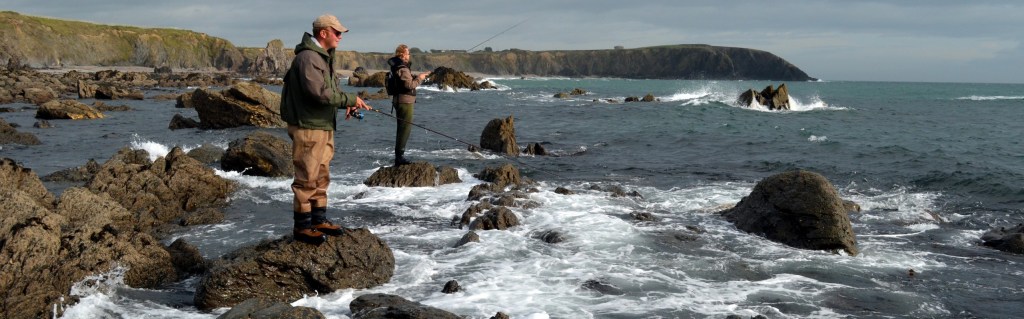
Last Thursday evening I bass fished in a southerly blow. Wet, windy, the waves broke and hissed and the rain fell heavily. Just on the edge of a system. In a two hour period I landed and returned two very nice fish. I was extremely lucky and delighted too. The previous evening I had also fished with a new range of flies from Andy Elliot. Whilst I also had fish, the luck i had on Tuesday evening was even better when, I landed a 68cm fish on the first cast as I was adjusting my foot position! The fly drifted onto the fish.
So there’s a lot of fish on the coast?
‘Somewhere over the darkened curve of the world the sun and moon were pulling; and the film of water on the earth planet was held, bulging slightly on one side while the solid core turned. The great wave of the tide moved further along the island and the water lifted.’
William Golding – Lord of the flies
Do you have the guidebook?
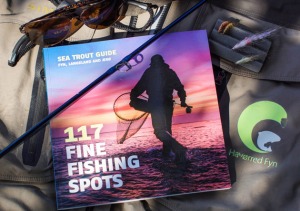
Sea Trout Fyn, 25 years in the service of sea trout have written an essential buddy to accompany you along the coastline of Fyn, Ærø and Langeland.
Fyn and the isles offer kilometre upon kilometre of coast just made for sea trout and sea trout anglers. More than 1,100 kilometres of coastline awaits, and there is scarcely a single metre of it where, at some point, a sea trout cannot be caught. But where do you start? Which are the best spots for different seasons?
And what about the wind and the current? How do they affect various locations? The answers to these and many other questions can be found in this guide book to 117 brilliant fishing spots around Fyn, Langeland and Ærø. Several of Fyn’s most experienced saltwater anglers have contributed to the book and share the benefit of their fishing experience. Here, there is plenty of inspiration for the seasoned trout angler and the novice alike, Good maps and accurate descriptions make it easy to find just the right fishing spot – depending on the season, fishing method and wind direction.
What’s in the book:
- 117 coastal spots on Fyn, Langeland, Ærø and the numerous smaller sea trout islands.
- Aerial photos of each spot bring a brand-new dimension to fishing.
- Fifteen detailed maps at a scale of 1:100,000, with depth contour lines.
- The best season and wind direction for each location.
- Useful tips about tackle, strategy and how to fish all year round.
- Useful knowledge about the sea trout.
- Guide to sandbars, reefs, troughs and other coastal features.
- Ten fascinating tales from some of the spots described in the book.
_________________________________________________________________________________
Thomas and his friends visited Ireland for a weeks bass fishing on the fly during 2010, you can see some of their experiences here As a writer Thomas is involved with the Danish sea trout Organisation Sea Trout Fyn. I was happy to receive a recent e-mail from Thomas requesting a little help in the translation and editing of some of the details contained in the book above.
Tangible Results
‘During the first 25 years, Sea Trout Fyn has undertaken almost 300 projects in the rivers and streams of Fyn. For example, more than 200 obstructions to upstream migrations have been removed, opening up 500 kilometres of rivers!
The 55,000+ overnight stays accounted for by sea trout anglers each year are vital to the local economy. It has been calculated that the municipalities’ annual DKK 4 million investment in Sea Trout Fyn produces an increase in turnover in excess of DKK 55 million each year, and the sea trout project has developed some 40 full-time jobs’
A near perfect set of opportunities to catch bass on opening day or close to it presents itself this year on the south coast – current conditions might be considered difficult but that’s fine, it just adds positivity to the equation. It’s the sudden change around the 15th / 16th to south westerly that’s just perfect but not only that this is combined with an incredible set of NEW MOON tides too. A chance to catch em…the text below is from this post on Probassfisher – from a while back – expect an ‘elastic to snap’ on the 16th June.
The forecast was for the big blow to arrive quickly on the south coast on Friday late morning or early afternoon corresponding to a rising spring tide approaching the top of its cycle. What this would do and depending on the arrival time of the system would be to generate ideal fishing conditions for bass. Coastal water would be clear and break white in the increasing wind strength; the sudden wave activity generated would provide cover to hunt and also create feeding opportunities that haven’t existed for a number of days. All this was happening over a single rising tide on a spring cycle. It was a perfect short bass fishing storm that was visible from as early as the 10th of October – 12 days previously; this was the stretching of the elastic. It snapped on Friday somewhere around midday of the 22nd.
See latest forecasts here
http://www.xcweather.co.uk/forecast/rosslare_harbour
Protecting South America’s Iconic Golden Dorado Fish
Supporting regional ecotourism and sustainable fishing
AMHERST, Mass. – A new study launched this month by University of Massachusetts Amherst fisheries biologist Andy J. Danylchuk, in collaboration with Argentina’s Ministry of Environment and regional partners including Juramento Fly Fishing, Tigres del Rio, Fish Simply, and Patagonia Inc., is the first to assess the impact of catch-and-release fishing and other human and environmental pressures on the golden dorado, a fish of high economic and recreational value across South America.
Data obtained from this project in the Salta region of northwest Argentina will be used to develop conservation strategies, proactive management and sustainable fishing practices for this iconic species. The project is also expected to contributute to greater sustainabilty for the regional ecotourism industry and the economic livelihood of local fishing guides.
As Danylchuk explains, “Little is known about how golden dorado respond to being caught and released, yet understanding this can lead to best practices anglers and guides can use to make sure fish swim away in the best shape possible.” Danylchuk, his graduate students and local stakeholders are also radio tracking golden doraro to look at movement patterns after fish are caught and released. He adds, “It is a challenge for emerging countries, because fishing tourism can represent significant income.”
The golden dorado is the so-called “charismatic” fish found in the rivers of Brazil, Paraguay, Uruguay, Bolivia and northern Argentina that draws recreational fishermen from around the world and represents an important economic support to local communities. But it faces strong pressure and population declines due to over-harvesting and habitat degradation from such human activities as mining and poor sewage treatment. Danylchuk points out that scientists need much more information to understand its ecology.
Francisco Mariani, manager of Fly Fishing for Patagonia Inc. in Buenos Aires, says the goal of the study is for the public, fishermen, government and tourism institutions of the region to work cooperatively and understand each other’s needs to achieve a collaborative, sustainable long-term fishing and tourism economy.
Danylchuk’s study will measure impacts of catch and release through factors such as fight time, air exposure and fishing method, as well as evaluate the correlation of these with physiological biomarkers such as blood lactate, blood glucose and blood pH. The researchers will also survey residents, fishermen, tour guides, sport fishing operators and government officials about the importance of golden dorado and potential conservation challenges they face.
The first week of the study produced over 15 golden dorados caught by recreational anglers and industry representatives of Ambassadors for Patagonia, Inc., Fly Fishing Nation and Solid Adventures in a stretch of the Rio Juramento in Salta. This work will continue over the next few months and form the basis of long-term research and conservation intitiatives by Danylchuk and other local, regional, and international partners interested in the sustainability of the golden dorado recreational fishery in South America.
Source : – University of Massachusetts
Few movements of wild creatures run to an exact timetable, year in, year out, and few are without their aberrant individuals; and few of us know our own familiar waters quite so well as we think we do.
Roderick L. Haig-Brown – Fishermans Fall
I’ve spent much of May indoors so I’m missing a valuable perspective, I don’t really know ‘what’ it feels like out there. Predominantly Northwesterlies seem to very much dominant and when I am out there it does feel a little cool. What does this mean, I’m not sure especially when I see terns loading up on high calorie sandeels. I’m looking forward to the opening in mid June and I hope to spend four days between the 18th and the 21st working on a project with David but we’ll see how it falls. Nearly there!

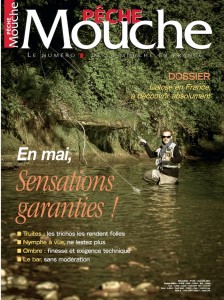
Peche Mouche No 108
La pêche à la mouche du bar, du bord, est certainement l’approche la plus exigeante qui soit, la plus gratifiante aussi. Jim Hendrick, un spécialiste hors-pair dans ce domaine, revient sur les connaissances et les techniques de base qu’il convient de maîtriser afin de tirer son épingle du jeu. Simplicité, observation, discrétion… et si c’était aussi simple que ça ?
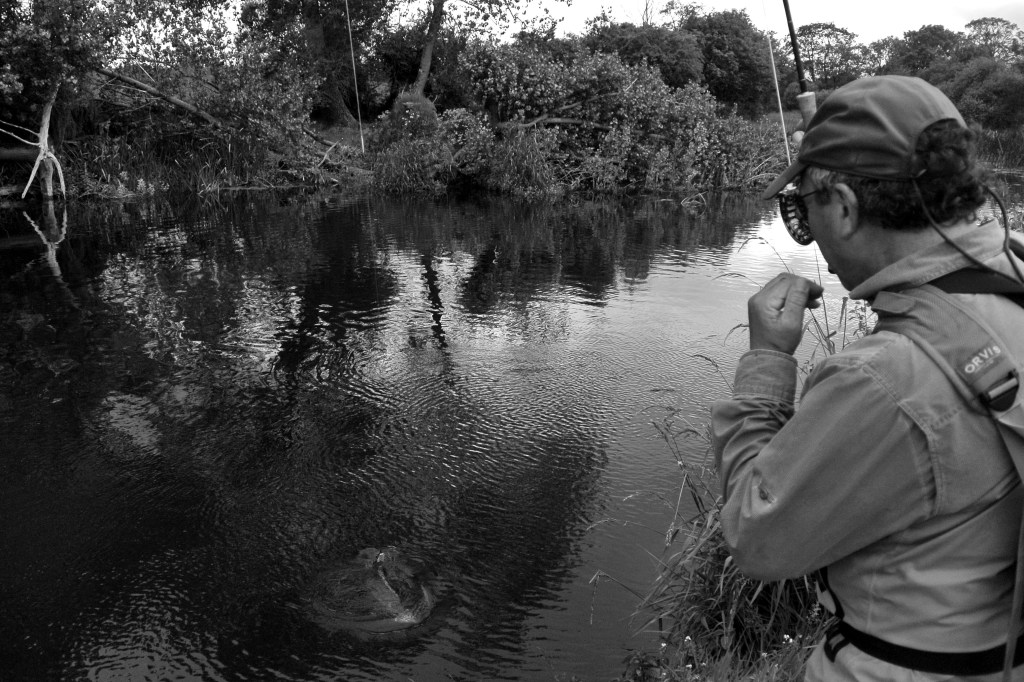
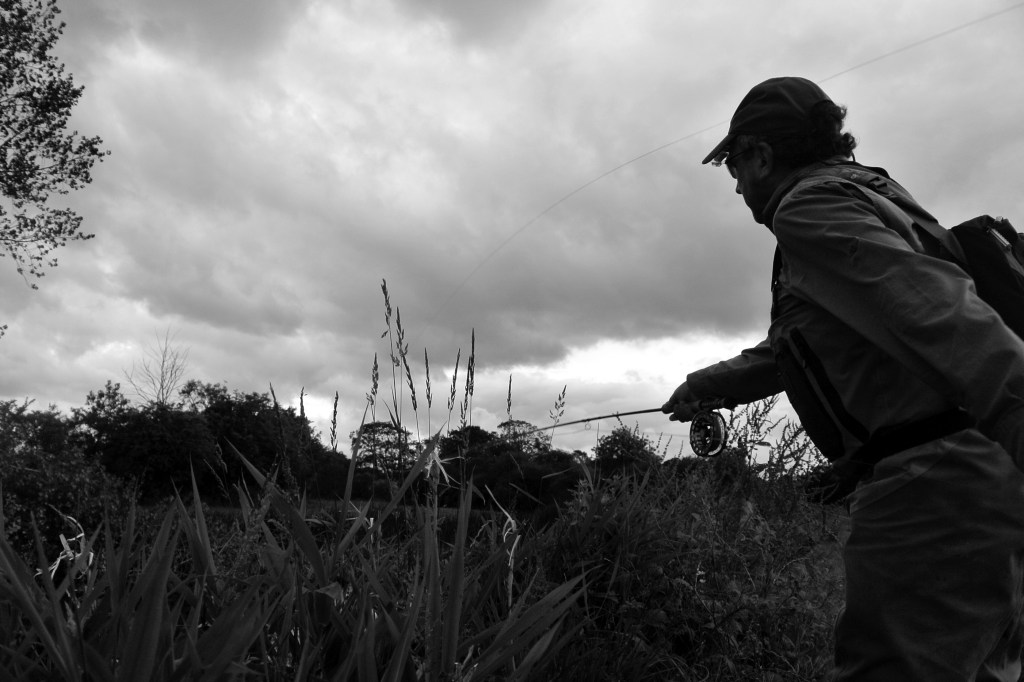
Its always great to see an article in an International magazine featuring bass fishing in Ireland, no more so than when you play a role in the article itself and its featured in Wexford. The May June issue of Peche Mouche, the leading fly fishing magazine in France contains an article by David Gaudochon which we worked on late last year. David is no stranger to bass fishing on the Wexford coast, in fact he’s a well travelled experienced guide and photographer. We last worked together for PecheMouche in 2004 – Wexford: ses Pubs et ses Bars
David Gauduchon
Globe-trotter infatigable, photographe et caméraman, David parcourt le monde, depuis 15 ans, pour sa passion de la pêche la mouche en eau douce et en mer. Co-créateur « de la Plume au Voyage » et collaborateur de Vincent Béraud, David vous fera partager ses plus belles découvertes et rencontres au bord de l’eau, en eau douce comme en mer.
The latest article is largely technique based, and these techniques centre on a few simple things I believe in when fly fishing for bass – Observation, Tactics, and Simplicity. Its not so much ‘a how to’ but rather and explanation of Davids experiences whilst fly fishing for bass with me on the Wexford coast and the techniques we used.
A big thanks to David.


You must be logged in to post a comment.