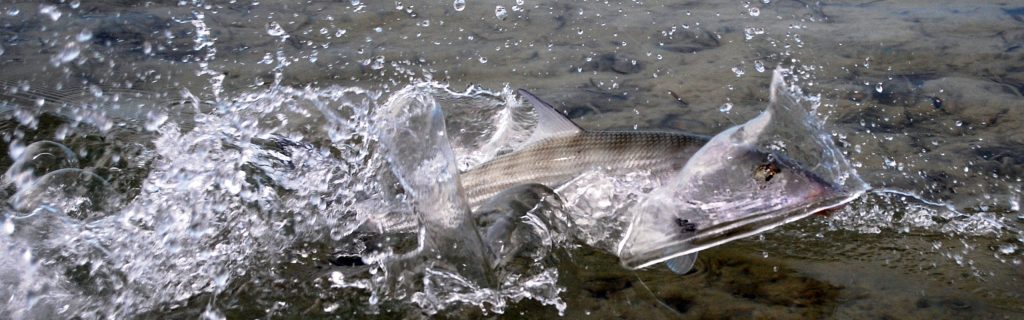
However, this is not to say that they are always that easy to catch.
Even on the Dingle Peninsula – sometimes, they can be downright exasperating! But with care and attention to detail, the right place at the right time and, above all, perseverance there’s a very good chance they can be enticed to the hook – and quite often fish bigger than would otherwise normally be caught. Three basic elements to any really successful trip.
Bob Moss – Shore Angling on the Dingle Peninsula.
Keep casting Bob
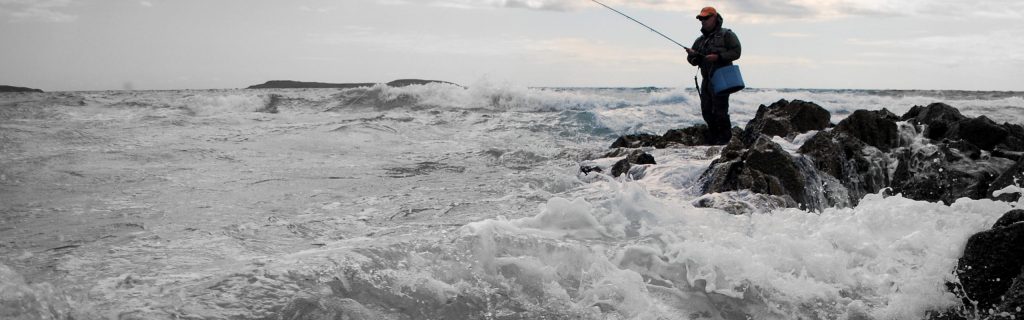
Imagine breaking white water, turbulence, waves wind and seaweed, slippery rocks and sometimes warm driving rain sea mist and spray. You’re a right handed caster and the wind is blowing from the south west – force four touching five occasionally, you’re on a southerly facing shore with a rising tide! Interesting times for the saltwater fly fisher!
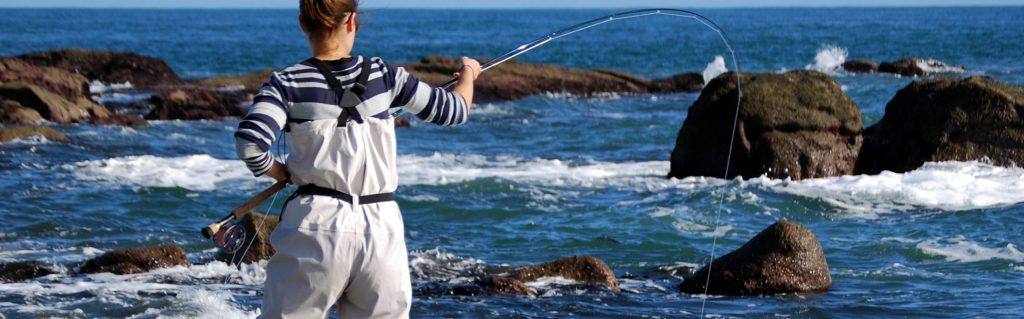
The presentations described in this post are made from rocky platforms that allowed me to be slightly above the fish, I can see them and the fly and no doubt at times, the fish can see me. I’m not casting very far. Sometimes it’s more difficult than this, but at difficult times opportunities exist beyond the norm. In shallower water with breaking waves where you don’t have the opportunity to cast into deeper gullies from a height and you might need to take the challenging step into the cauldron.
Great care must be taken by the angler in these circumstances – especially as he will often find himself fishing alone under these conditions. One of the key elements of this type of fishing and one often forgotten about (beyond been able to cast and stay safe in this environment) is line management. No cast can be made safely with the right hand in these circumstances whilst facing the sea, the Belgian will get it out there but there is the subsequent loss in distance, were looking for a little bit more this time.
So we learn to cast backwards into the rough sea. First I strip of the line onto the ground, the head drops down first, running line on top, stretched a little against the drag. Then I pull it all back into the basket running line first. I use a mangrove hip shooter which is deep and sits low to my left side. I can take out the line spikes in the bottom that are taller and more flexible and hold the running line higher in the basket; this allows the line to drop to the bottom around the stiffer shorter spikes. Sometimes this works, sometimes it doesn’t. Casting backwards with the line basket on your left hip, the windward side, and unfortunately the ‘wave ‘ward side too does present its own issues. This can be problematic for a number of reasons.
- One thing the hip shooter does it forces you to remain somewhat shallow.
- Line tray is to the left and windward side whilst casting backwards.
- The hip shooter is buoyant and will rise and fall in waves pivoting at your waist belt
- Sometimes a coil of line will loop between you and the side of the basket under the belt support; it needs to be dealt with
- Waves will spill the line out of the line tray
- The running line needs to travel out of the tray close to and across your body and clothing during the backward cast
- When you turn to engage the cast and control the fly the tray is now on the lee side of your body – often creating a more difficult swirling ‘close to’ breeze that whips the running line out of the shooter
- You’ve made the cast turned and with good turnover and after you have engaged the fly you strip, strip and then you get a tangle!
You’re fishing and the tangle is not too bad, you can see the head twenty feet away – waves are breaking down on the line and there’s weed close to shore. Decisions regarding your action should be based around the time you can afford to release the tangle without getting the line, the leader and the fly already at sea into even more trouble which you will have to then deal with.
- If you are fishing with a floating line you may have more time
- If you are fishing with an intermediate, you will have less time
- If you are fishing with a sinking line it’s probably very little time anyway
Decisions regarding time spent untangling running line mid retrieve should be made regarding depth of water, distance between running line tangle and the head, the extent of the tangle and the difficulty of the conditions. There is a possibility of increasing time spent untangling by using the wind to retrieve the fly and line and keep it out of trouble until the tangle is sorted.
This frequent line management under these conditions is a skill in itself that takes a long time and a lot of patience to learn – but keeping YOU fishing and the fly in the water longer will inevitably lead to more fish.

Some points worth considering
- Try not keep more running line in the basket than is necessary or is greater than you can cast
- Never travel from place to place in tough conditions over rocks with line in the basket
- Finer running line is more liable to tangle than a more robust running line, remember its about control, distance is not an issue in these circumstances
- NEVER take your eye off the sea when you are dealing with a tangle
- Sometimes a tangle is a tangle – disengage and stop fishing to get it out
- At times a ‘survival cast’ of simply lifting the entire line off and out of the water back onto the shore is needed
- Try to get fish onto the reel in these conditions rather than ‘hand lining’ the fish – this can lead to trouble for both of you
There’s a lot of challenges going on in these conditions that force you to remain focused – never lose sight that your safety is always a priority.
Improving your saltwater fly leaders for coastal fishing – PII
Before realising the potential behind constructing your own saltwater leaders learn to tie and become familiar and confident with the following excellent knots. Tie them securley across different diameters of mono filament and fluorocarbon
- Perfection loop
- Bloodknot
- Non slip loop knot
Lefty Kreh uses a simple rule of thumb for constructing saltwater leaders, its one I use for bass fishing (with some variations) probably most of the time I’m fishing, it’s often called the 50% leader formula. When building a tapered leader like this, the butt section (closest to end of fly line) should be roughly half the total length of the leader. The butt section is followed by a second section of line, one step lighter or thinner than the butt section that is roughly one half the length of the butt section. This is then followed with a third section, once again one step lighter, and half as long as the second section.
Following the third section you can elect to taper further with a fourth leader section, or you can tie in your tippet of around 16 inches or even simply let the third section be your tippet!
Let’s say we are building a standard 9’-0” leader for bass fishing in Wexford. For most bass fishing situations I find a 9′-0″ leader of 3 sections and a short tippet a good all arounder. The following set up will apply
50% of the total length is butt section – approx. 55 inches
50% of the 55 inches comprises the mid-section of the leader – approx. 27 inches
50% of the 27 inches comprises the tip section – let’s say 14 inches
The remaining length is reserved for tippet.
We don’t need to be exactly right on the above measurements give or take a few inches here and there and allow some loss for making good knots too.
Regarding strengths of line to use the following can apply – one thing to consider here is diameter in preference to BS. Stiffer higher BS are very difficult to knot.
Sources of quality MONO leader
If you are casting with a #7 line
30lbs in the butt section
20lbs in the mid-section
10lbs in the tip section – this may in fact be your complete tippet
If you are casting with a #8 line – general bass fishing
40lbs in the butt section
30lbs in the mid-section
20lbs in the tip section – plus your final tippet (12-16)
If you are casting with a #9 line – BIG flies tough conditions or locations
50lbs in the butt section
40lbs in the mid-section
30lbs in the tip section – plus your final tippet (16-20)
The above style of leader will turn over in most conditions and cast large flies like deceivers and clousers for bass with no problems. In some instances, such as situations where a delicate presentation is not required, and you may have to turn over larger flies, you may build a leader of a lengthened butt section of 6 feet and one piece of 3 feet plus your tippet. This may also apply where circumstances have become windier and tougher and you need greater turn over ‘strength’. The adjustments are yours to experiment with finalise and make!
Be aware too that if you are fishing with an intermediate line, your length of leader can often be considerably shortened in effect your line is your leader. 5 feet (3 + 2) leaders on intermediates with a tippet section is often a perfect solution. With fast sinking lines there are occasions where an even shorter leader can be used.
On the other hand, when fishing a crystal clear rising tide for spooky sea trout or shallow water bass fishing with floating lines you may need an extra long leader of say 12 to 14 feet, the same rules apply for the sections of the leader.

The size of lines that you construct your leader with depends on a few things, the weight of line you are casting, the size of fly you are casting and what strength of tippet you need in terms of your quarry. If you are fishing a tippet of 8 – 10 pounds you should probably start with a butt section of around 30# test. For example a 12′-0″ leader casting small flies for mullet might translates to (6-0″ of 30BS, 3-0″ of 20BS, 18 inches 12BS + tippet) on a #7 line.
Some Points to consider
- BS and diameter relationships
- Suppleness and stiffness
- Mono-filament and Fluorocarbon
- Behavior in temperature
- Where and when you fish
- Length of sections and fishing requirements in situations

As I cover the different types of water and how to fish them, I will see a situation and say, “Why didn’t I think of that?” This is a reaction that we all have; it is certainly how I learn from other anglers. You can learn something, not only when another angler tells you where and how he took the fish, but even when someone tells you about an event, positive or negative, that might shed light on how to solve the puzzle, explain the mystery. Even if it’s just for one night, one tide, or one location, it is unlocking the puzzle that makes fly fishing fun. Yes, it is exciting when fish are feeding and taking everything that lands in the water. But even if you land only one fish, or make just one fish take your fly, if you have discovered something new, it makes fly fishing truly rewarding.
To me, it’s more than catching numbers of fish that makes fly fishing special – its catching that one fish.
Lou Tabory.
Improving your saltwater fly leaders for coastal fishing – PI
People ask me a lot about leaders for bass fishing with the fly.
One aspect mentioned frequently is the experience that people have of their fly not landing properly, people most often describe the problem as ‘the leader lands in a heap of line and doesn’t ‘turn over’ properly’ especially when casting at the coast. Even when casting is good poor turnover can happen when your leader doesn’t function correctly. The solution to this problem often lies in the ‘taper’ the construction and the materials used in your leader.
The energy that’s moving along your fly line when you are making nice loops moves evenly along the progressive tapers of the line towards the end. Suddenly when the unrolling loop meets the different material of the beginning of the leader, depending on its composition, this is where the problem of poor turnover often starts. A change in diameter of the end of your fly line to a material with a considerably less diameter means energy is not dispersed along the leader evenly or in a smooth transition towards the fly.
A one-piece leader of 3 metres of say 9Kgs BS may work in gentle conditions, not very effectively mind, but toughen up the circumstances by adding wind and the leader is likely to collapse continuously. Your loop formation, your accuracy, distance, presentation and fishing will suffer as a consequence of poor leader construction.
There are a number of solutions to improving your saltwater leader turnover
- Build your own multi piece tapered leaders – next post!
- Purchase purpose built tapered SW leaders
- Purchase purpose built tapered SW poly leaders (adding depth control)
- Purchase or build your own furled leaders
Adding a taper to your leader is essential for achieving improved turnover when you’re fly casting into wind on the open coast – it helps you catch fish in many ways.
The key to any successful and sustainable tourism initiative is achieved through a clear sense of difference from other competing destinations or services. For me as a guide this was achieved by using a ‘wide and broad base of development and marketing’ of the local attributes and strengths of Wexford as a bass angling destination. I tried to combine this with a mindset of sustainability and mixed it with the unique attraction varied and challenging coastal environments, heritage sites and abundant local flora and fauna of the Wexford coast.
Whilst working on articles for angling publication or my site I try to portray both Ireland and Wexford in a very positive light. I do this by making the most interesting photographs that I can, not necessarily of the fish but of the people who are fishing with me and also the environment and time in which they find themselves. There are many things other than fishing that make any trip to Ireland worthwhile, and its important for me to remember that when I’m out there. Not only am I looking to capture from time to time that ‘trophy’ moment, but I’m also hoping to record the influences that are shaping peoples experiences of the country in which they are investing a lot of personal time. The culture, the lifestyle, the history of Wexford all play a part in shaping a sense of authenticity.
The richer the experience offered to the angler the greater the chance of diversification into the local community and support of ancillary services, good food, good music, immersion in modern Irish life, quality Irish made product, visiting anglers cant find this at home.
The more that I do this it becomes more obvious there are times when I don’t see what visitors marvel at or appreciate and I find myself missing the moment for them. It’s possible to see the same thing so many times that you don’t appreciate it any more. I am always conscious that over-selling a product could have a negative impact on any business, especially a fishing guiding service. Angling guided services should not to be encouraged or developed for their singular sense of ‘self promotion’ ‘look at me I’m a bass guide come fish with me all and sundry’- to be successful as a guide is to be many things but successful bass guiding in Wexford is about not standing in isolation but rather about building a small sustainable community based economic and local development tool and network aligned to creating a total experience for destination anglers.
The Wexford environment doesn’t possess dramatic, jaw-dropping scenery. It doesn’t have the ruggedness or sense of wilderness that you get on the west coast. It doesn’t have outstanding architecture. What Wexford does have is a multiplicity of different smaller environments and opportunities that are much more complex and which interact in a way that is so subtle it can almost be overlooked. You must look closely, almost discover each one be it cultural, natural, or historical in order to experience the fullest and greatest depth of detail.
Not only is it important to realise that each experience is unique, but spending time in many different fishing environments and places of local heritage and culture enables people to understand the interdependence and influences one environment has upon another. It is only through this understanding and wider sense of enjoyment that a much greater appreciation and understanding, advocacy and empathy for the protection and conservation of the coastal resource in all its aspects will truly develop.
The careful management of any guiding service into other local tourism networks and taking sensible opportunities to work and demonstrate allegiance with other local similar businesses with diverse but related experience and knowledge (fly tyers, fly casters, other guides, or accomodation providers) should be actively considered. This projects confidence, enhances profile and indeed professional credibility. It also strengthens possible partnerships that can create foster and extend networked interdependent strategic relationships across local coastal communities, conservation groups and activity providers. It lessens the needy and often craven urgency expressed frequently in the over utilisation of angling media as a means to secure customers.
Ultimately an ‘Experience’ is what I try to create for my angling customers, the readers and visitors to my blog. By facilitating people into a multiplicity of venues, the sanctuary of estuaries, the excitement of rocky shores, the thrill of fast moving, powerful currents, the more likely they are to see and feel the ‘Wexford Angling Experience’ that I try to create. Not only do I hope that this provides a positive environmental impression and experience of Wexford and indeed Ireland, but it also creates a realisation that even after spending a lifetime of fishing for bass in these venues that we are simply scratching at the surface of the sheer number of methods, techniques and presentations that you could make to catch them. There’s a fine line between selling the fishing and managing your clients realistic expectations. A good guide will always try to strike that balance.
“EVEN AFTER SPENDING A
LIFETIME OF FISHING FOR BASS IN THESE VENUES WE REALISE EVENTUALLY THAT WE
ARE SIMPLY SCRATCHING THE SURFACE OF POSSIBILITY.”
Most seasoned travellers will know that to expect too much is to invite disappointment. “There are not as many fish as I expected”, “The fish are smaller than I expected”, “The weather is different than in my own country”. The weather is the major stage on which all the elements will perform. In Ireland that factor is enough to strike fear into the heart of any guide. It’s simply not possible to plan at times. The seasons of 2007, 2008 and 2009 were extremely difficult for bass fishing. And this is where the paradox lies. Wexford has its unique environments, it has its own sense of itself and it has a superb saltwater sporting fish that performs admirably on fly or lure. But it performs only on the basis of two key elements one which is predictable (the moon) the other (the weather) is not so regular.
The portrayal of the fishing and the fishing environment must reflect a performance risk accurately and fairly to visiting anglers.
We all know yes, that at different times bass can be caught with different methods. All anglers have their preferences and the more sporting the method employed the more the weather will impact negatively upon that method. It will force you into circumstances where you need to ‘angle’ much more creatively and efficiently. By combining the environmental impact and the challenges that the weather creates for lure and especially fly-fishing, this fusion of influences must somehow manage to enhance the experience.
In other words, it’s not always easy to come to Wexford to catch bass at the drop of a hat. It can take time and effort, patience and depending on circumstances this could be days, weeks or even years.
When it’s difficult it’s the smaller decisions, the glimpses of fish in a wave, the perfect cast into a gale, the surface strike in pouring rain –moments of genuine satisfaction that make fishing what it is.Don’t be fooled into thinking it’s easy, it’s not! At times the sun shines and every fish is big and silver and each cast produces a miracle. Those are the days that we fish for. But remember too – Wexford can be challenging, but it has many different rewards if you know where to look and you like to discover whats local and unique.
‘BUT AT TIMES THE SUN
DOES SHINE AND EVERY FISH IS BIG
AND SILVER AND EACH CAST
PRODUCES A MIRACLE OR NEARLY, AND MEMORIES ARE FORGED IN GOOD COMPANY AND SURROUNDINGS.’

How bonefish on the fly made me a better bass fisherman.
The first time I cast to bonefish of course I couldn’t see them, I was directed by my guide stood high on the stern of his skiff. Eventually I learned to stop looking ‘at’ and began looking ‘through’. I started to see, sometimes! On the second day things improved and slowly during day three I started to ‘catch’ the fish. Don’t get me wrong, I only caught two fish that day, but I caught them in a very specific way, I was hunting for them seeing them.
Each cast became very important and had a specific objective, each footstep, each raising of the rod and line, I was alert too and ready in the fishing world I moved through to find my fish. Wind direction, sun position, moving clouds, moving water, tails! Surely, your thinking, they are very different species, European sea bass and bonefish, they are, but what I learned about catching bonefish by trying to do my best I then applied to my bass fishing.

Eliminating the similarities, rod weight, line weight, leader and reel both species can be caught on #8’s with 9′-0″ leaders and medium sized flies (no. 2- 1/0). At Andros BIG bonefish eat BIG flies, the only significant difference might be the line profile and its tropical counterpart. Head length might be one strategic difference (in the air more, shooting less) but its nothing of huge concern – you could say the gear transfers from species to species, I’ve caught bass on my bonefish lines and vice versa. The fish behave differently but at times too they behave very similarly – the key difference for me was that I was looking to see the fish I wanted to catch, I needed to see them before they saw me and I needed to give them a fly without spooking them.
I don’t ‘see’ a lot of bass in Wexford, that I have opportunities to cast too with the fly. (Sometimes in specific places with specific condition yes). What I do in Wexford and other places a lot of the time is hunt for the invisible, I cast to fish that I cant see but I imagine they are in specific positions and locations at specific times. I mentally place fish behind a rock, on a corner, lying in a gully, along a seam, under weed.
Just because I cant catch my imaginary fish doesn’t mean they’re not there, it generally means I’m not good enough.

So whether your casting to a waving tail or an imaginary hoisted sail of a spiky dorsal in 24 inches of water – make sure its your best cast, the best position, the best wind direction, the most favourable wave break, the lowest cover, and that you understand the behaviour, the attitude, the hunting and timing patterns of your invisible prey.
On the fly this takes considerable time -make sure you get out there, often!

Darkness fell quickly and Jupiter appeared, low in the southwest.
They walked back to the house beside the rising gibbous moon. Far out past the tidal flats, bait fish leaped for their lives.
Thomas Harris – Hannibal Rising


You must be logged in to post a comment.