A little bit of fishing in your day – Jim
THIRTYARDS
Bass Fishing. At the pace of the saltwater flyfishing coast. Wexford, Ireland – est 2003.
recent posts
about
-
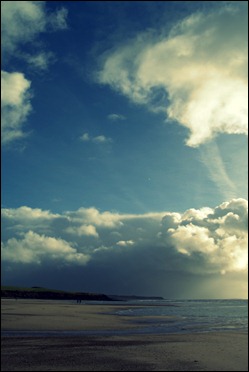
“Winter is the time for comfort, for good food and warmth, for the touch of a friendly hand and for a talk beside the fire: it is the time for home.”
Edith Sitwell
-
//player.vimeo.com/video/83659978
‘Fly fishing is an international affair. In each locale, fly fishing is surrounded by unique, foreign cultures that have evolved their own approaches and styles for the sport. The general, technical aspects of fly fishing are the same: rod, reel, waders, dry-fly, nymph, etc. The behaviour and environment are what alter. Differences aside, we all tell tall tales of fish caught and lost; we all miss work; we all threaten our relationships with excuses to fish; we all wake up at ungodly hours on a Saturday morning to arrive in time for a hatch – fly fishing is a powerful current that binds an even stronger worldwide community.
The Mission. Meet up with three guides in three very different places: Iceland, Argentina and the Bahamas. The locations are unique, the cultures vary, and the styles pointedly their own, but more importantly how is it all similar? Envision the contrast between the lives of a Bahamian flats-drifter, a Patagonian trout bum, and a midnight-sun Icelander – who are these people? Travel along as we seek the common threads that gravitate and connect each of them to our shared passion: fly fishing.’
-

“Do not tell fish stories where the people know you; but particularly, don’t tell them where they know the fish.” Mark Twain
-
Diversification key to sustainability of coastal communities: Fisheries sub-Committee
An Oireachtas sub-Committee has this afternoon called for government policy to focus on the survival of rural coastal and island communities by promoting a diverse range of activities. The sub-Committee on Fisheries has outlined how aquaculture, inshore fishing, sea angling, marine tourism and seaweed activities can contribute to vibrant coastal and island areas.
Some of the recommendations include
- The current fragmented governance of the maritime sector be rationalised, along the lines of Marine Scotland across the water;
- Certified, practical courses for fishing communities be established by Bord Iascaigh Mhara, in conjunction with new training agency SOLAS;
- Inland Fisheries Ireland work more closely with tourism agencies to ensure the integration of sea angling into tourism packages and marketing campaigns;
- The Department of Transport explore the licensing of dual use fishing vessels both for commercial fishing and tourism angling and how their conversion might be grant-aided; and
- The Departments of Marine and Environment resolve the regulatory licensing issues that pose an impediment to the development of the seaweed industry.
For the full report visit this link below
Promoting sustainable rural coastal and island communities
//www.scribd.com/embeds/200324906/content?start_page=1&view_mode=scroll&show_recommendations=true
-
I believe the essence, the real secret of learning fly-casting lies almost completely in the very able hands of the student, and the necessary ingredients are persistence and patience; that the principal role of the instructor is essentially directional and most of all –
 encouragement and inspiration. I feel that the first requisite in teaching fly-casting is to communicate just that to the student.
Confronted with the usual photo cliché of a large fish and grinning fly fisher ,a recent convert to our sport wisely observed ” The fish takes far too much credit for his or her catch. In fact, it is the fish that makes the decision to take the fly!. It is, dear friends, the student who teaches him or her self to cast a fly!
The quintessence of learning is doing. The quintessence of teaching is inspiration. At some point the learner should understand that ultimately, beyond the simple fundamentals of fly-casting, they must stand alone, and that the joy of self discovery is the real essence of learning. That concept can only be communicated when people develop genuine trust in one another.
Observations On Teaching Fly Casting by Mel Krieger © 2005


 THIRTYARDS