Words Brendan McCarthy – Urbanflyguides.com
Source http://www.thisisfly.com
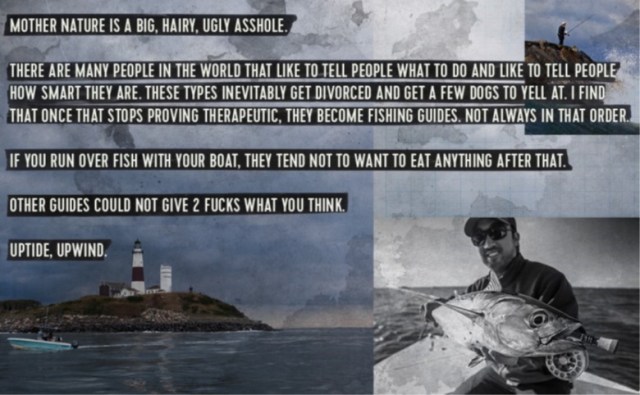
Bass Fishing. At the pace of the saltwater flyfishing coast. Wexford, Ireland – est 2003.
“A more stable, long term, option for tourism is to preserve these things which we have in Ireland — I guess they’re taken for granted a little bit.”– Claire O’Halloran
I first started catching bass on metal, most notably the choice was either the Abu Krill or Abu Toby. The reel I used was a DAM Quick 440N and it was loaded with 12 or 14lbs BS mono. I learned quickly to terminate the line with both a link swivel and a normal swivel. Things improved dramatically when my father bought me a 10’-0” Berkley Buccaneer spinning rod. This longer lighter rod replaced a solid glass rod my grandfather had given me earlier, the Berkley was pale blue in colour and had complex wrappings at the butt, with black foam handles, I loved its oversized rings. It changed my bass fishing life at the time and I fished with it for many years.
On a summer strawberry pickers salary, I learned to be careful and clever with the gear I had. There were days with many fish, days with few and lots of days with none. With the Berkley I would also use simple light terminal tackle, paternosters and ragworm or crab, rolling and watch leads. But spinning the Krill and Toby were always for me what I enjoyed most. I had two types of fish to catch the easy ones based in and around Wexford harbour and the difficult ones based south on the coast at Kilmore and Rosslare. Difficult because it involved a 15-mile cycle, twice!
Over lots of time I developed different skills with each of the lures. They fished differently of course and I felt I could catch fish on most occasions with what I had learned. Any of that arrogance of competency was destroyed early one morning in the company of Clive Gammon at a reef near Rosslare as I stuck a Krill in a rock on the first cast, the least said the better!
I fished then with the attitude that the fish were always in front of me and it was up to me to catch them. I believed they were there swimming, hunting, waiting. If I was fishing and not catching it was because I wasn’t good enough or the fish didn’t want what I was using or they saw it too frequently or whatever.
I still fish like this today, I believe they are there. But now I believe that in many situations rightly or wrongly of course, that if I’m fishing and not catching that I must ‘fish’ less and spend more time waiting before I cast again. In some instances I’m impacting the fish if I continue to simply cast.
So I stop casting and I start fishing…
From time to time I will make some personal recommendations in relation to fishing gear I have used that works – this is one of those times – Jim Hendrick
This reel has its origin in the LW series which was the first properly sold fly reel according to standards. The design is tested in a pressure chamber for optimum lockout properties against water and dirt. In principle, you can use and abuse this reel and it just works…time after time.

This is why the L5W is so popular among guides whose very livelihood depends upon their equipment. For the recreational angler, it will exceed expectations. Take on your dream trip and know with complete certainty and confidence that it will function as it is supposed to.
All components of the reel are well proportioned to each other, there are no weak links. Every detail is carefully designed for maximum reliability and the result is a piece of equipment that lasts a lifetime. For example, Danielsson lock the spool with a clamp coupling that is common in industrial applications. It is an extremely reliable locking mechanism that never lets go. To remove, just unscrew the lock knob with a few turns, lift and twist the spool triangle. As the lock knob does not need to be removed, there is no risk that any foreign material can enter the mechanism. This is an elegant solution that Danielsson alone offer!
The braking system features a multi-plate disc stack which properly distributes the braking energy. There is no risk of overload. Danielsson were the first to offer this technology in a fly reel and the function is a result of their experience. The choice of materials in disc brakes is also very important. It is common in the industry to employ carbon matrix materials, but these steadily degrade over time and lose their effectiveness. Danielsson use a polymer composite that maintains its integrity even during severe temperature shocks such as the result of a long hard run. Like the Control, the user’s manual includes instructions for custom-configuration of the braking system so that you may further fine-tune the system to your personal preferences.
The reel comes in three different sizes, ranging from trout to salmon fishing. A nice detail is that the spool from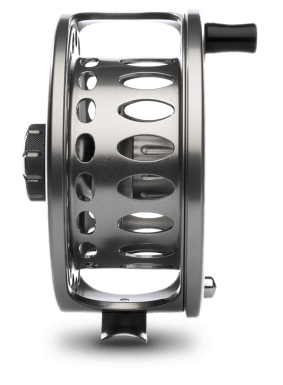 L5W 4seven fits the L5W 6nine and vice-versa. Saltwater is no problem at all, it can handle it splendidly. Danielsson know the price is reasonable; particularly with respect to the fact that this reel retains its value and will become an heirloom – a product to treasure.
Danielsson L5W features:
Source Danielsson Fly Reels
Can we catch big bass consistently?
Is this a question we should be interested in?
Is it really that important that we pursue bigger fish?
Remember too in a healthy protected population of fish we could all be catching more and bigger fish – simple!
There’s a considerable angling challenge of course in pursuing bigger fish in a very much reduced population, which often leads us to conclude that once we catch one we have become better anglers. This is fine if we believe we have become a better angler than we have previously been because of the experience and focused effort but not so good if we think this has made us ‘better’, in some ways, than other anglers.
An angler spends forty hours a week for four weeks fishing for bass. He catches one fish greater than ten pounds each week. Without knowing the detail of his considerable effort we would consider him a master bass angler who has caught four specimen fish in a month! Perhaps we should read – after 160 hours of fishing he has caught four specimen fish.
Time on the water is one simple factor that will inevitably yield bigger fish to already capable and experienced anglers. The more time you are willing to invest the more likely it becomes that you will encounter bigger fish.
Some anglers who are prepared to spend a lot of time in pursuit of bigger fish will invest in specific locations with specific techniques, say eight hours a day lifting and dropping plastics in a current for five days to catch a ten pounder. We already know, and often too easily, that this is a deadly technique, so another capable angler spends two 20 hour weekends on the same technique and catches a ten pounder.
One angler catches a ten pounder after a week of fishing one angler after a weekend. It’s a question of perspective. But it is always related to personal effort and learning and technique and time on the water.
It’s probably inevitable that if we spend a lot of time at something we should also get better at it. This may not always be the case, but if we build on our experiences which have helped us to improve then it will be similar with bass fishing. The more time we spend and invest the better we become, if we are learning! To that extent we probably are catching two ten pounders in forty hours of effort. Or one fish in twenty hours of effort and so on.
We can get increasingly consistent with time effort and understanding. Our frequencey of capturing bigger fish will increase. What you do with this ‘learned consistency’ is for you to decide, you’ve earned it, you’ve done the time.
I once showed a very nice man how to cast a lure rod, how to control a surface lure, how to give the fish the bait. It took two hours. On the next tide he caught and landed an eleven-pound bass after twenty minutes of effort. He was happy beyond belief.
Within one year he was catching bass on the lure regularly
I once showed a very nice man how to cast a fly line, how to control a big streamer, how to give the fish the fly. It took two years. During the third year he caught and landed a ten-pound bass after eighteen months of effort. He was happy beyond belief.
Within three years he was catching bass on the fly regularly.
Both are now (if we were to think of it in such a way) on a one big fish every 50 hours and declining time routine ! – that’s if, of course, they stop and are bothered, which is doubtful, to count and weigh and measure that is!

We shall not cease from exploration
And the end of all our exploration
Will be to arrive where we started
And know the place for the first time
T.S. Eliot

 THIRTYARDS
You must be logged in to post a comment.